With the opportunity of being awarded with the WHO-TDR Postgraduate Scholarship, I am currently a student at the Universitas Gadjah Mada (UGM), Indonesia from Bangladesh. Here I am taking the international program in Public Health (MPH), majoring Implementation Research that is co-sponsored by UNICEF, UNDP, the World Bank and WHO. My stay here in Yogyakarta is almost 6,000 KM away from home and for the first time I am in overseas study leaving my only son, parents, wife and the sibling. More or less I miss my family, although that feeling is always paramount for my son. However, the recent emergence of the COVID-19 pandemic has had a significant impact in my overseas life here. But undoubtedly, it’s a quite new and unique experience that I have been going through these pandemic days and managing my daily life independently.
Not only limited to here, all around the globe we are passing through a difficult situation in this current pandemic caused by the COVID-19. In this reality, many around us are being affected with several mental and social issues even without getting infected directly from the virus. These ultimately are believed to have contribution in affecting individual’s typical life, which consists of self-care, productivity and leisure. But true that as human being we have also the long history of facing and overcoming this kind of crisis with various potentialities.
Needless to say, these pandemic days are not like the other typical days that I passed though at the beginning in my life at Yogyakarta. All on a sudden it’s been a big change in life style that is brought by COVID-19. I used to love attending the scheduled classes at campus, joining library, meeting friends at favourite coffee shops, praying at mosque and performing compulsory outdoor exercises at the main building (Graha Sabha) campus in the evening everyday. But unexpectedly, my routine in daily life changed remarkably due to this pandemic; as on campus activities were announced to be closed. Apart from that, I was completely out of direct communication with the closed ones here in Yogyakarta, rather became dependent entirely on virtual medias. Accepting all these restrictions in day to day life and isolating myself from all kinds of social gathering was like an unimaginable reality. Due to the frequent deterioration of global and local situation, I felt down and was desperately looking for some sorts of alternative options to adjust with this sudden changing lifestyle as much as possible.
But, to be compliant with the rules of social distance at the time of COVID-19 pandemic, there is nothing better substitute other than staying at home. However, I was fortunate enough since my enrollment at UGM to have been in touch with some excellent local people at campus here in Yogyakarta. By that way, I started to be familiar with the typical tradition, culture, living and many other relevant affairs of the local community. As a consequence, commonly some of them also used to share the updates in terms of local rules and regulations regarding the pandemic via WhatsApp messages. Their virtual company was also supportive to my mental health. But still living in a new territory, isolated in a single room, managing all necessities independently, working with academic tasks; all these are not easy to handle during the global crisis of pandemic. That’s why initially I was afraid of mostly about the supply and availability of daily commodities in the local shops, as it was disrupted in many countries due to the pandemic.
News
TDR Students from 3rd batch (Kinley Gyem-Bhutan) and 4 th batch (Pham Huong Giang-Vietnam) was participated in the Faculty Fair talk show in Graha Sabha Pramana UGM which held on 31 November – 1 December 2019.
Full video of Faculty Fair, please click below :
The implementation Research Class held outbound activities on 21-22 September 2019 in Kebondalem, Prambanan, Central Java. Students from the 4th batch, program manager and staff were participated. This activity aims to introduce the daily life of rural communities in Java. This is particularly important while all students were originated from outer Yogyakarta. A good understanding of the local culture will helps students to adapt and interact with their environment.
Culture is a means to unite people and live-in events, gatherings and visit to local communities are really important to understand the native culture, develop bonding and explore a new community. The 2 days live-in event to Prambanan helped us to see the different colors of this beautiful country. We experienced different shades of Javanese and Indonesian culture, right from learning ‘Jumputan’ printings and creating beautiful prints on t-shirts, to moving our body and dancing traditionally on folk music with the village children. The trip helped us to recall that life is fun along with physical activities. Riding bicycles wearing colourful ‘caping’ hats transformed us in to Javanese people. The visit to ancient ‘Candi Sojiwan’, made us admire the unique local architecture even more. That evening, the setting sun witnessed all of us returning back to our childhood days and playing various indigenous games. The hospitality provided by local people was overwhelming. Their gesture of cooking delicious food, helping us during the entire trip and providing comfort during our stay at their homes touched our hearts. We tracked up the hill top next morning to witness the red sky and beautiful sun rise. These 2 days enriched us with the local Indonesian and Javanese culture and was really helpful for us to connect with the native people in more compassionate manner. As public health scholars, we should understand the local culture and this field visit was an appropriate mixture of learning and recreation with vibrancy. (Abhishek)
It is privilege to have students from Nepal, Bangladesh, India, Vietnam, Myanmar, Timor Lester and Indonesia, to take parts as international students on this postgraduate program supported by the World Health Organization-Tropical Disease Research (WHO-TDR). The total students of this batch is 15 students.
Universitas Gadjah Mada in collaboration with WHO TDR has been initiating Graduate Program on Public Health-Special Program of Implementation Research on Tropical Diseases since December 2015. The program curricullum is designed with Public Health syllabus as its core and Tropical Medicine for its elective topics. This idea of this program was to enhance future researchers capacity in designing and conducting implementation research, particularly on tropical disease which are still common in South East Asia region. The program curricullum consist if participatory teaching methods such mini lecture, case study, field visit and course project.
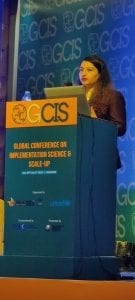
The Global Conference on Implementation Science and Scale up was held in Bangladesh from 29th June to 1st July 2019. The conference showcased the role of Implementation Science in promoting a culture of evidence based health and other social development programmes, policies and practices. There was a TDR Postgraduate Scheme Networking meeting session on 2nd July, 2019 at Center of Excellence for Science of Implementation and Scale-Up (CoE-SISU), BRAC James P Grant School of Public Health at BRAC University.

DESCRIPTION
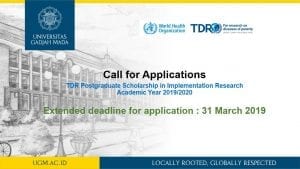
The Faculty of Medicine, Public Health and Nursing, Universitas Gadjah Mada (UGM), Yogyakarta, Indonesia invites suitably qualified candidates to apply for a TDR Postgraduate Scholarship available in the International Master Programme in Public Health, with a focus on Implementation Research for the 2019-2020 academic year.
The scheme is supported by TDR, the Special Programme for Research and Training in Tropical Diseases, co-sponsored by UNICEF, UNDP, the World Bank, and WHO (hosted at WHO in Geneva, Switzerland), and provides a full scholarship (http://www.who.int/tdr/capacity/strengthening/postgraduate/en/). Only applicants from low- and middle-income countries of WHO South-East Asia and Western Pacific regions are eligible.
A total of 28 delegates comprising teaching staff, academic staff, and students from FK-KMK UGM attended the 22nd Joint International Tropical Medicine Meeting (JITMM) 2018 in Bangkok, Thailand. The international conference was held in Amari Watergate Hotel Bangkok from 12 to 14 December 2018. This year’s JITMM was successfully organized by the Faculty of Tropical Medicine, Mahidol University (FTM MU) Thailand, with collaborations with SEAMEO TROPMED Network, TROPMED Alumni Association, The Parasitology and Tropical Medicine Association of Thailand, Mahidol Oxford Tropical Medicine Research Unit (MORU), and the Department of Disease Control, Ministry of Public Health Thailand.
Site visit to Balai Besar Pengamatan dan Pengendalian Vektor dan Reservoir Penyakit (B2P2VRP), Salatiga is part of UGM collaboration with local institution as part of class: Zoonosis Vector Control Course. Students visited the B2P2VRP Salatiga were divided into 2 periods (on Oct 25 – 26 , 2016 for batch 1 and on June 1-2, 2017 for batch 2).
During this 2 day visit, students had great opportunities to learn vectors in a short Microscopic training, learn how to collect mosquito larvae in paddy field and how to collect adult mosquito at night time. The experiences, knowledge and skills gained from this course are expected to be beneficial for their future work particularly when they returned in their home country.
As part of Infection Control Subjects, students visited Sardjito Hospital (Infectious Diseases division) to give understanding the Infectious Control system in the hospital and its challenges. First batch of students visited on April 12, 2016 and second batch was on September 23, 2016.